Skip to content
Capabilities

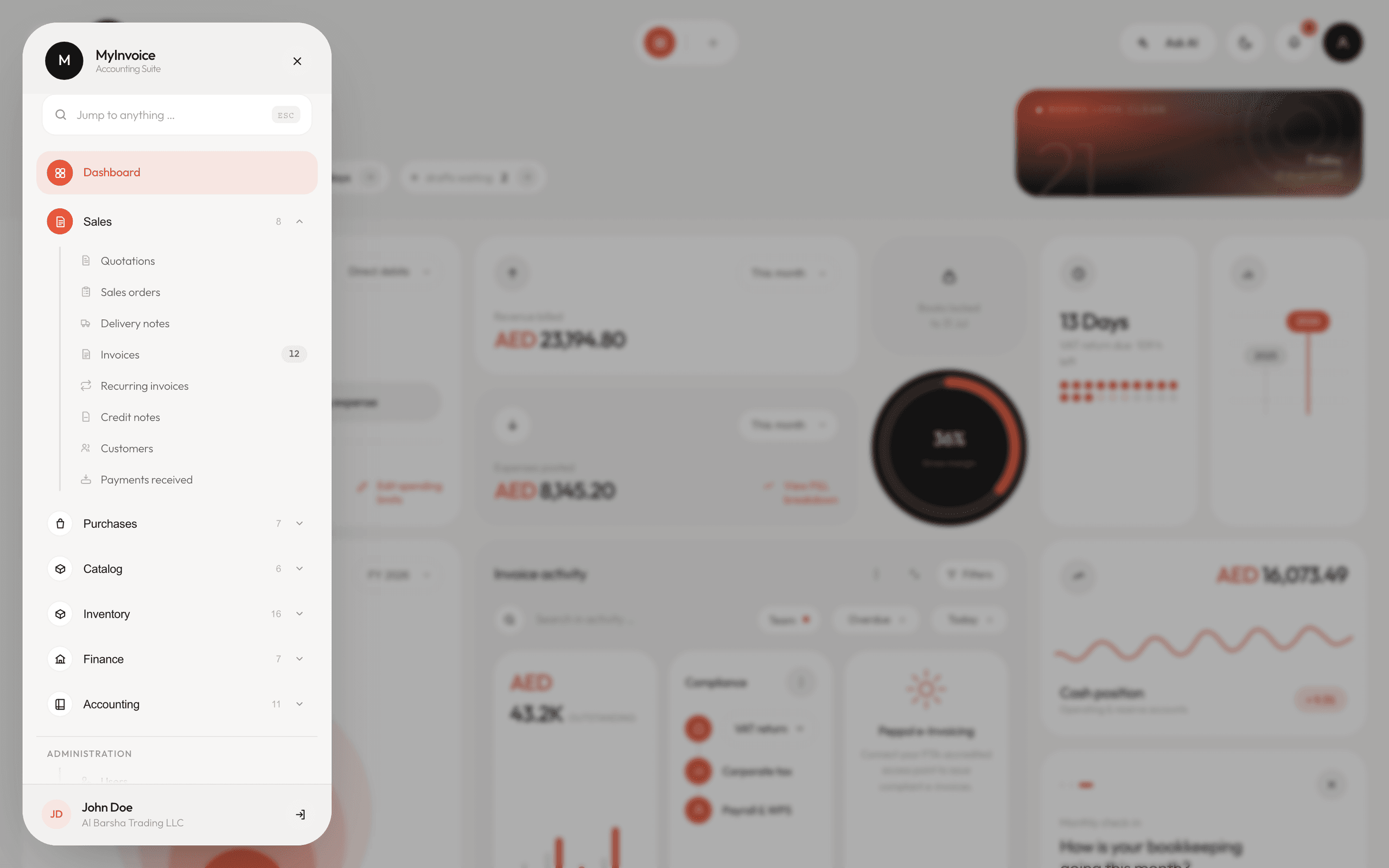
From the first quotation to a filed VAT return — 62 modules across seven groups, sharing one set of records. Below is what each part does, and how it is enforced.
Documents
Quotations, orders, delivery notes, invoices, credit & debit notes
Tax
Five VAT treatments, TLV QR, corporate tax, Peppol delivery
Books
Double-entry ledger, period locking, year-end close
Stock
Warehouses, batches, serials, WAC & FIFO costing
At a glance

Twelve things you stop doing by hand.

Quotations & orders

Priced once, converted without re-keying

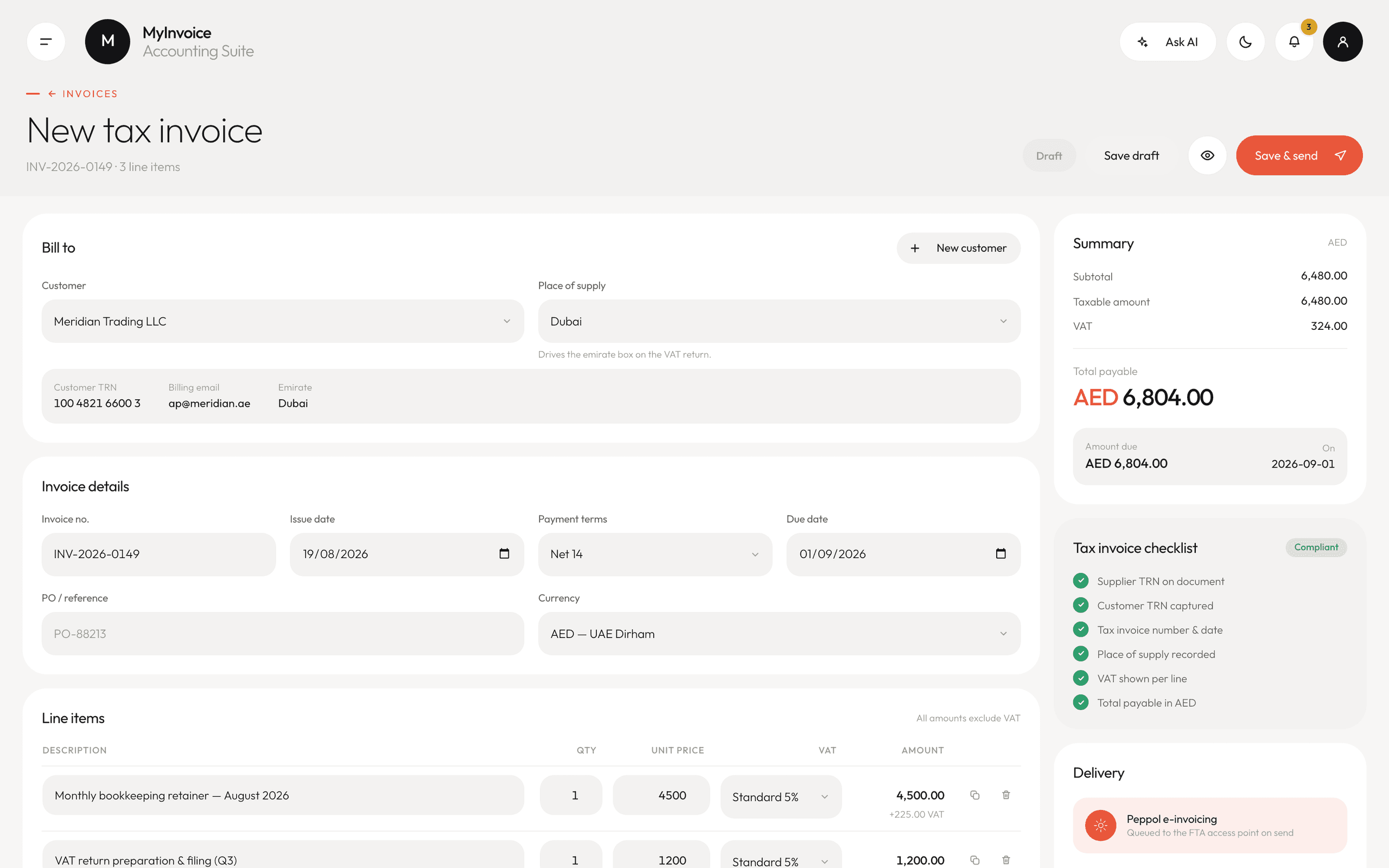
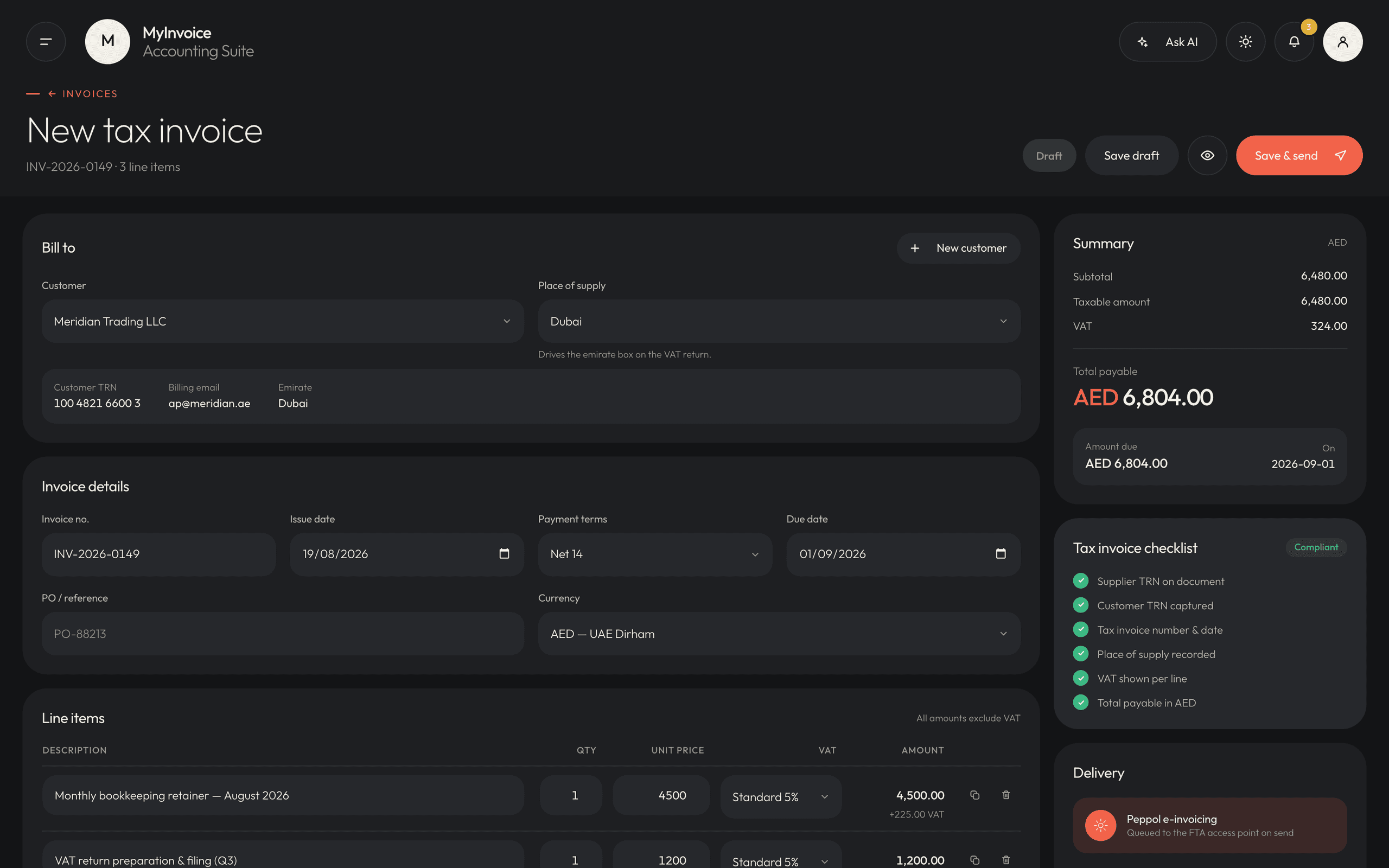
Tax invoices

Gapless numbers, TLV QR, five VAT treatments

Recurring billing

Schedules that issue and number themselves

Credit & debit notes

Mirror-reversed in the ledger, never edited away

Payments

Eight methods, instalment plans, automatic reminders

Expenses & bills

Three-way matched before they post

Double-entry ledger

Auto-posted, period-locked, always balanced

Inventory & costing

WAC and FIFO layers, COGS posted on issue

VAT returns

Computed from transactions, traceable to source

Corporate tax & Peppol

Filed from the same books

Roles & audit trail

Five tiers, before-and-after on every change

Connected Apps API

Scoped keys, allowed methods, IP whitelisting

The screens

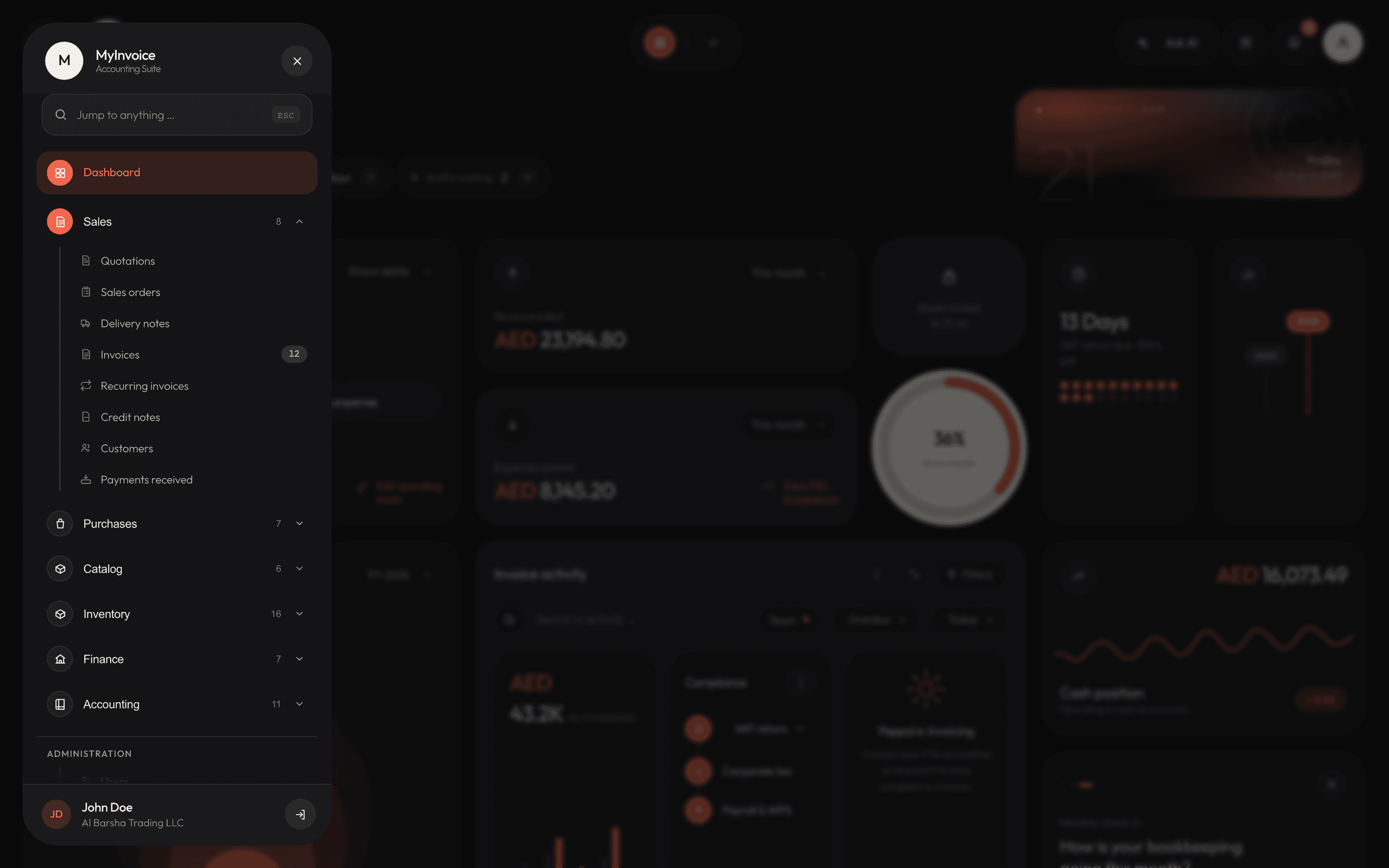
Five screens, one turn of the thread.

The detail

What each screen is actually doing.

One card per screen above, with the mechanism named rather than the benefit alone.

  • Documents

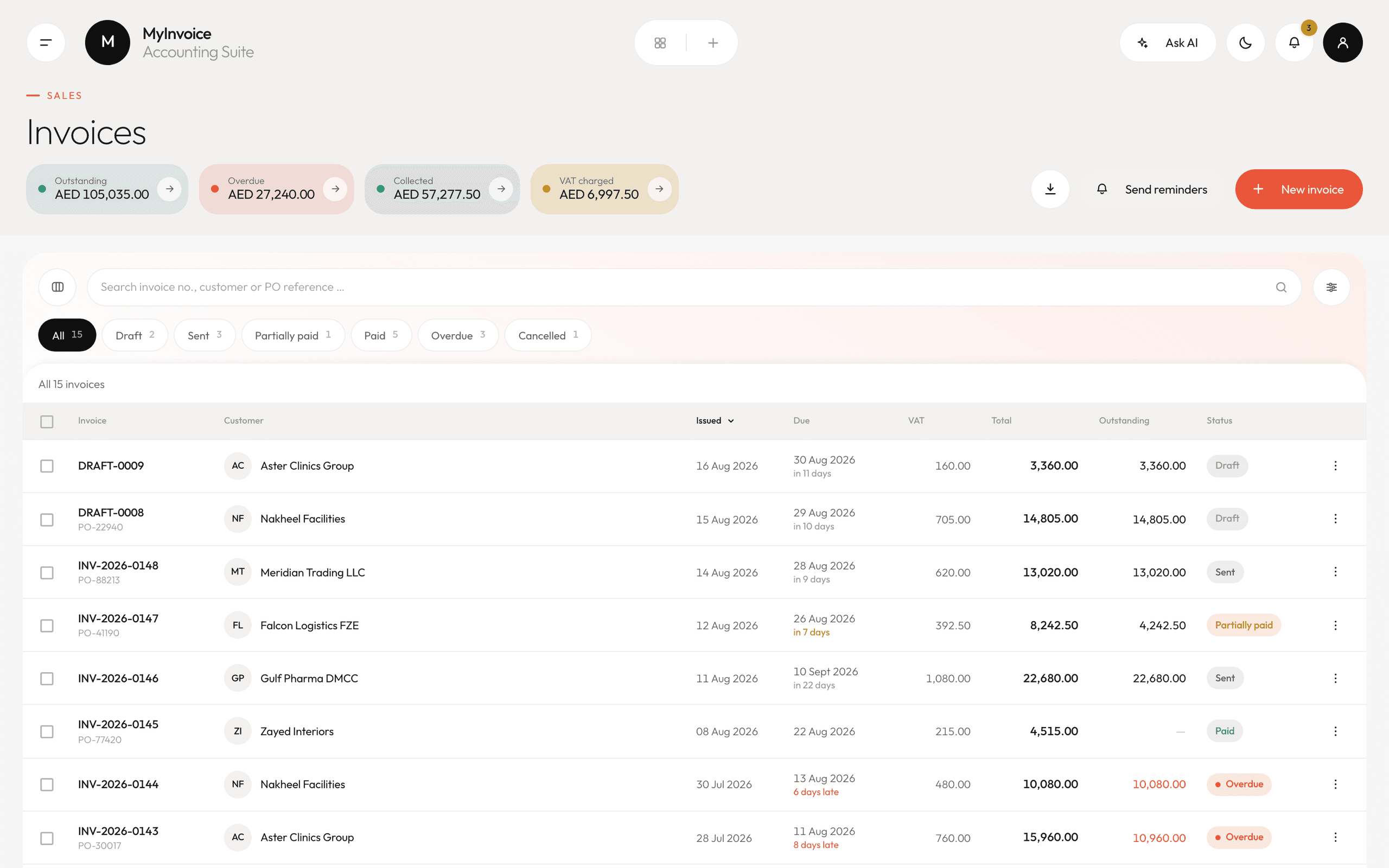
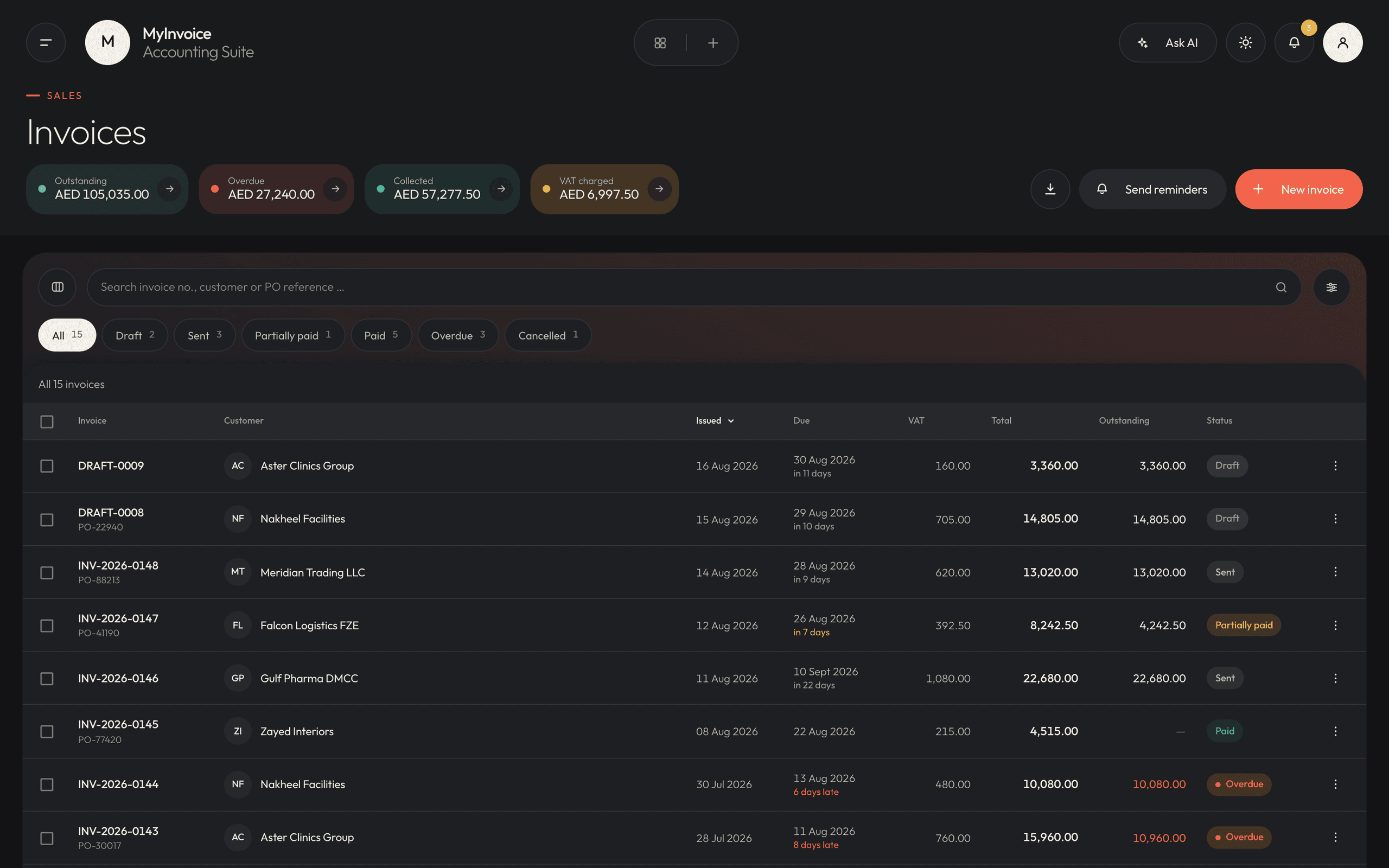
    One register for every document you issue

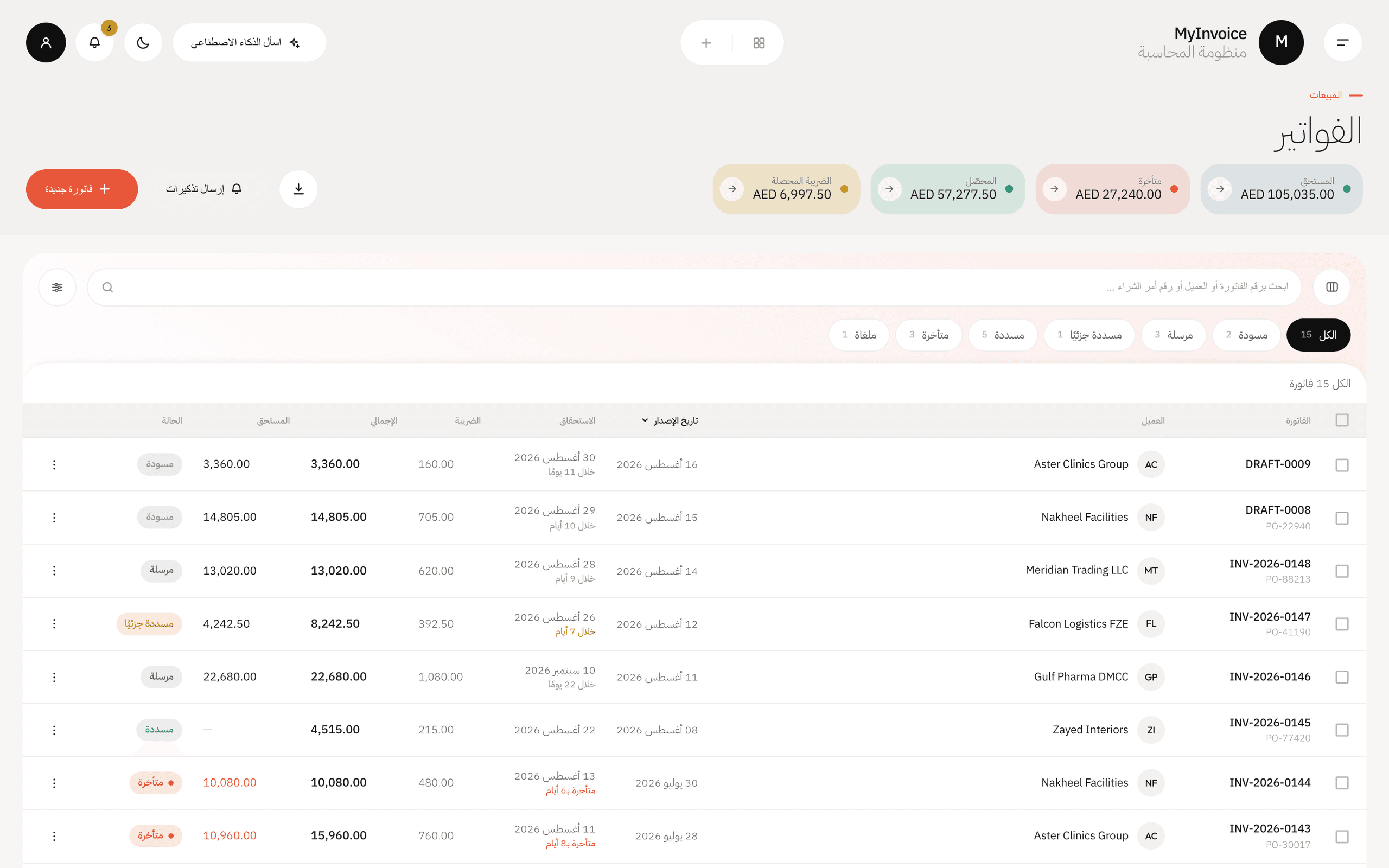
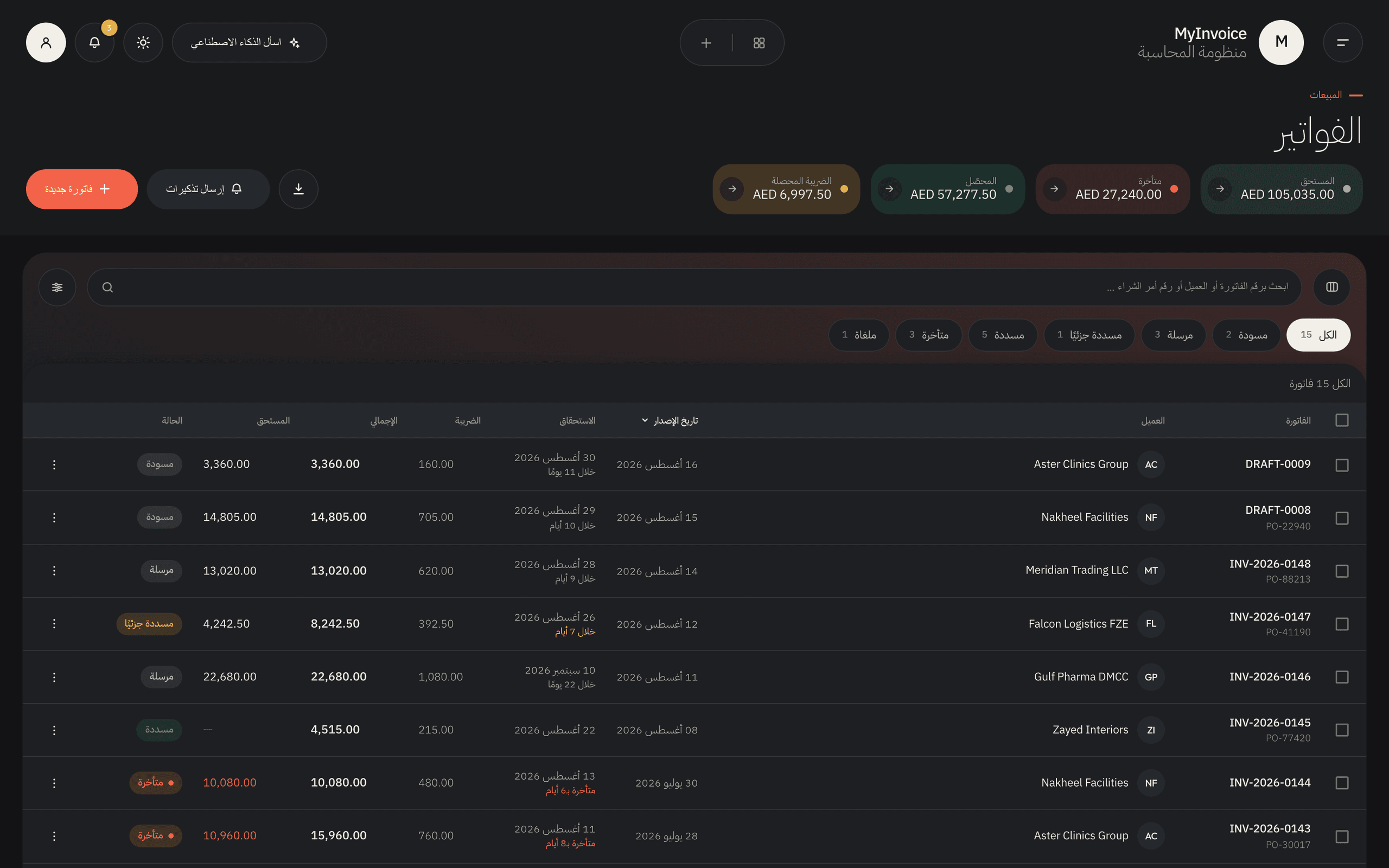
    Quotations, sales orders, delivery notes, invoices, recurring invoices and credit notes share one register, one numbering discipline and one set of templates. Filters are states, not saved searches.

    • Six PDF templates — Classic, Modern, Minimal, Professional, Spreadsheet Compact and Minimalist, each with the TLV QR.

    • Status as structure — draft, sent, partially paid, paid, overdue and cancelled are first-class states with their own totals.

    • Recurring schedules that generate and issue on their own, with the numbering sequence continuing correctly.

  • Tax

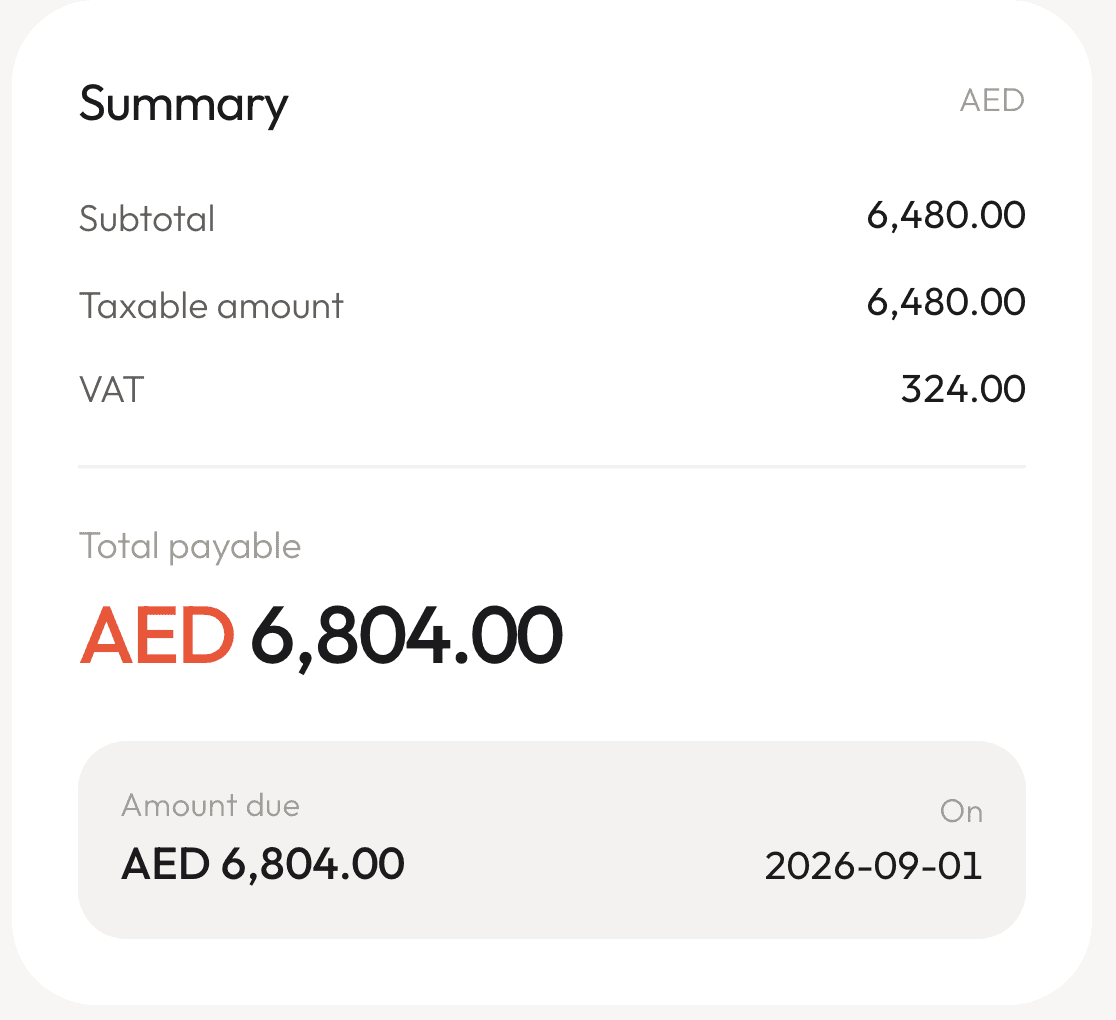
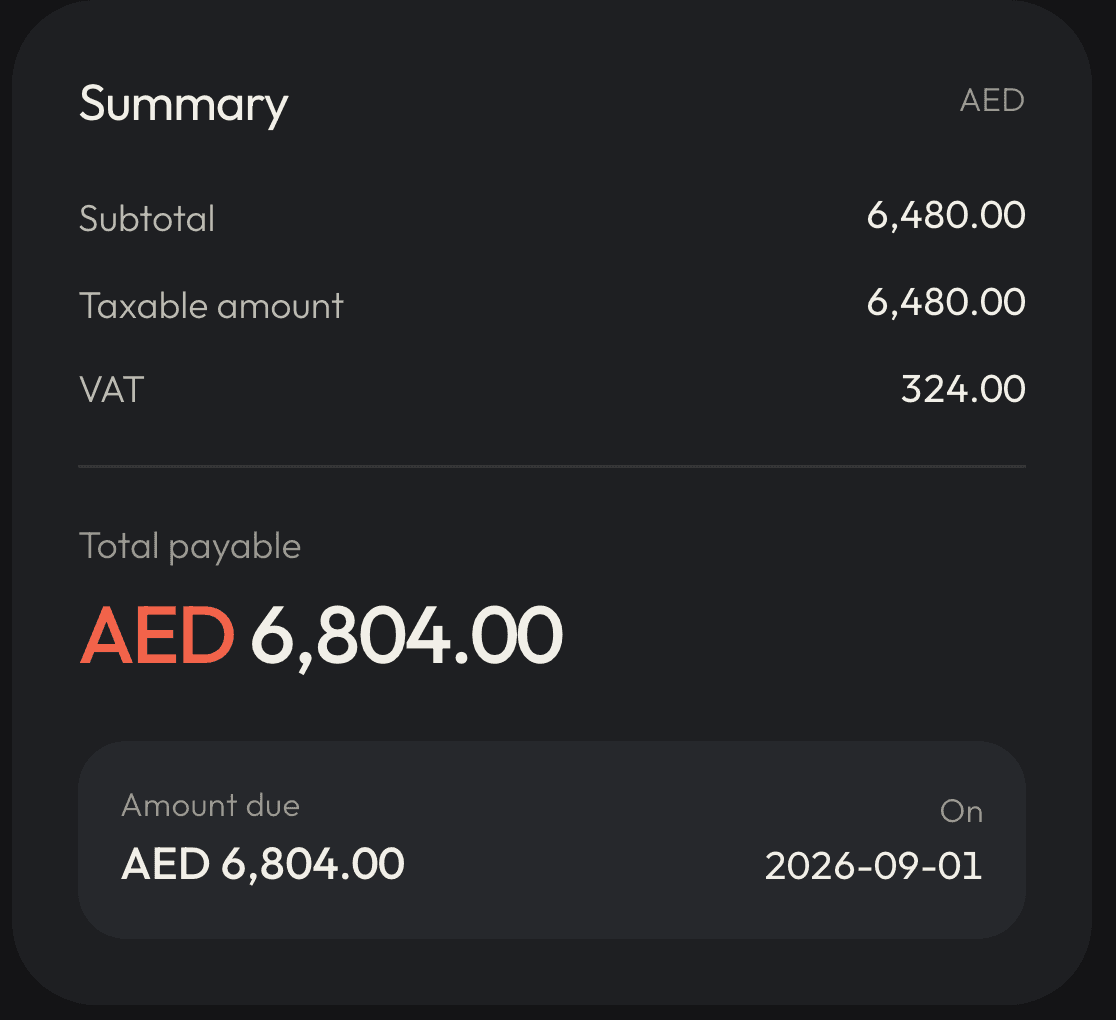
    VAT computed where the number is born

    The treatment lives on the line item, not on the document. That is the only way a return reconciles: each line carries its own rate and basis, and the return is the sum of lines you can still open.

    • Inclusive or exclusive pricing, resolved per line rather than per invoice.

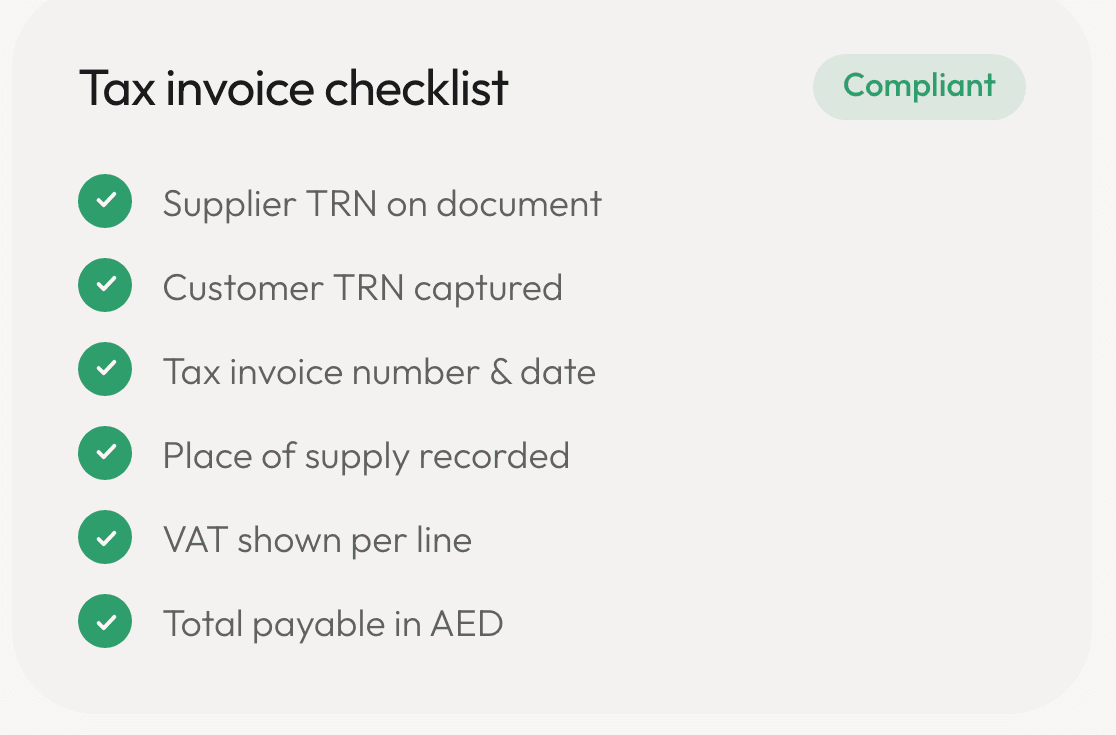
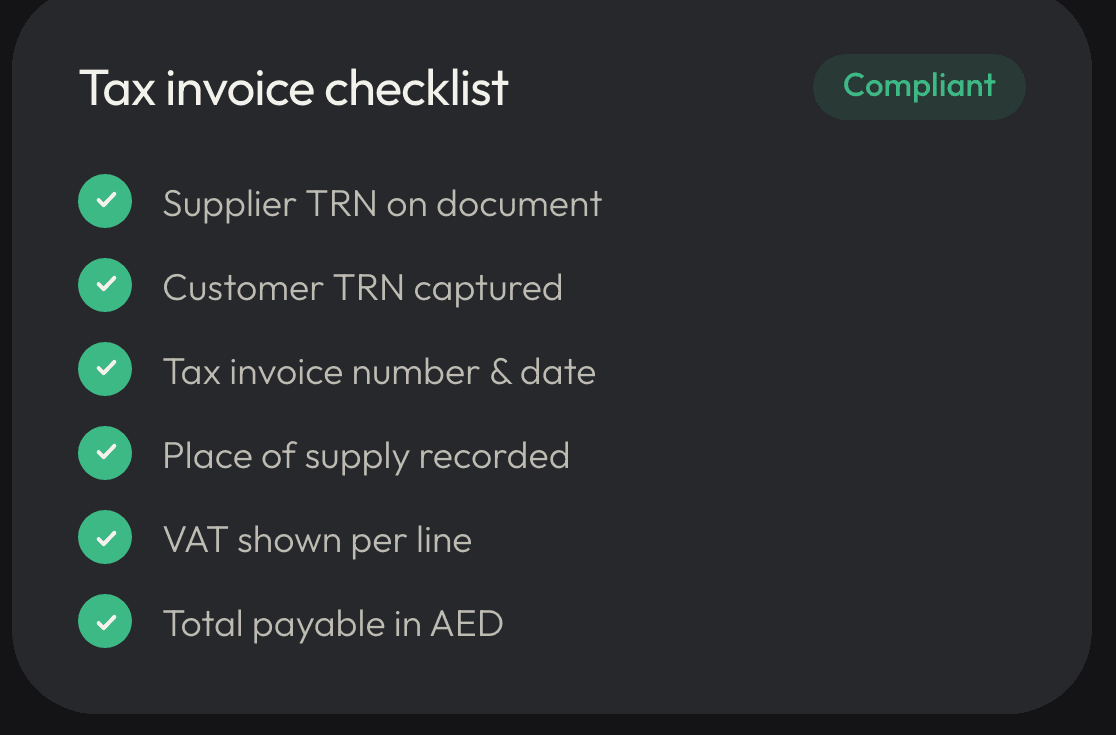
    • A live compliance checklist that confirms supplier TRN, customer TRN, place of supply and per-line VAT before the document is sent.

    • Place of supply drives the emirate box on the return, so the geography is captured at entry.

  • Accounting

    A ledger, not a report that looks like one

    Documents post balanced double-entry journals on their status transition. Debits equal credits by construction, closed periods reject new entries, and voiding posts a mirror-reversal rather than rewriting the past.

    • Auto-posted from source — invoices, bills, payments, credit notes and stock movements each have their own posting rule.

    • Trial balance, P&L, balance sheet and general ledger built from the same entries, so they cannot disagree.

    • Three-way matching on supplier bills: billed quantity cannot exceed what was actually received.

  • Inventory

    Stock that agrees with the accounts

    Every quantity change goes through one choke point, inside a transaction that also writes the ledger. Warehouses, batches, serials, allocations and transfers all resolve to the same valuation.

    • WAC and FIFO cost layers maintained per product, with COGS posted on issue.

    • Goods receipt to bill — receipts debit inventory against GRNI, and the supplier bill clears it.

    • Transfers never invent COGS — moving stock between warehouses changes location, not value.

  • Insight

    The position, without waiting for month-end

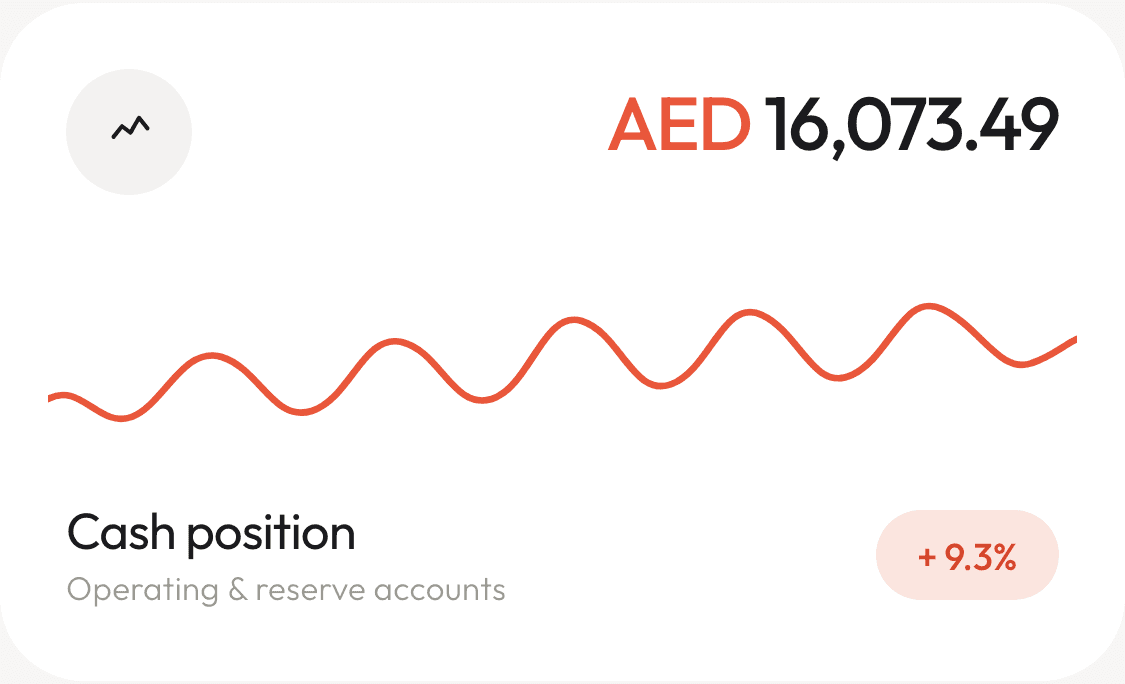
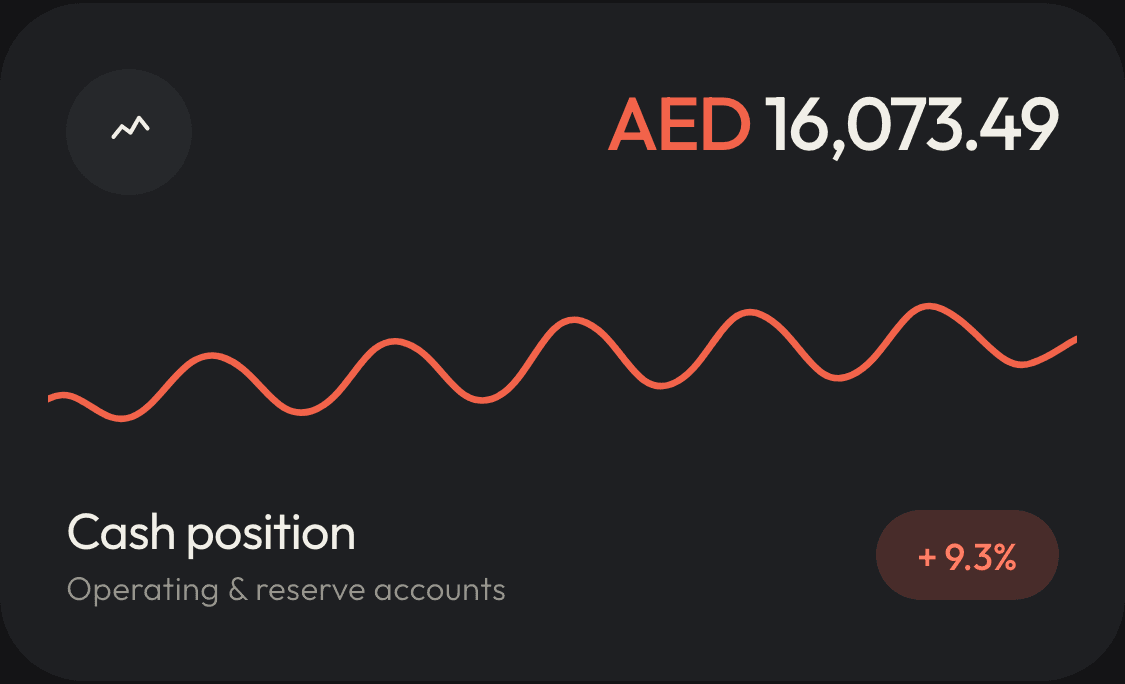
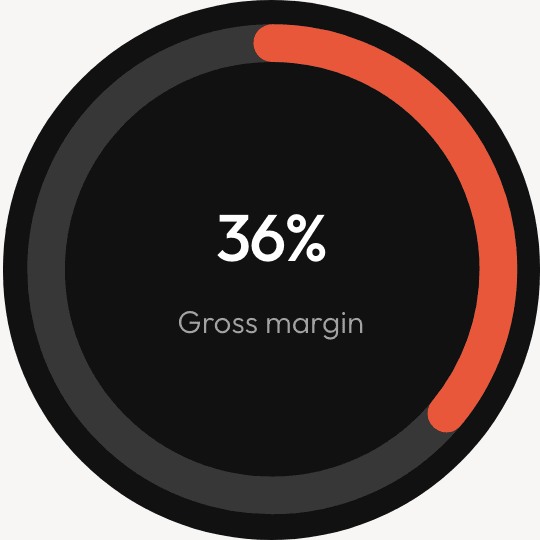
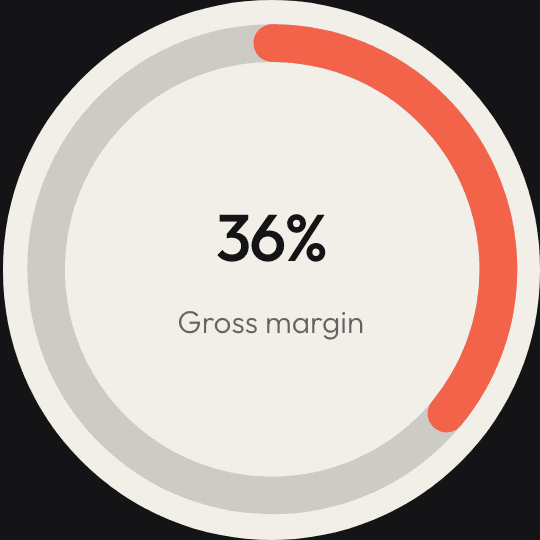
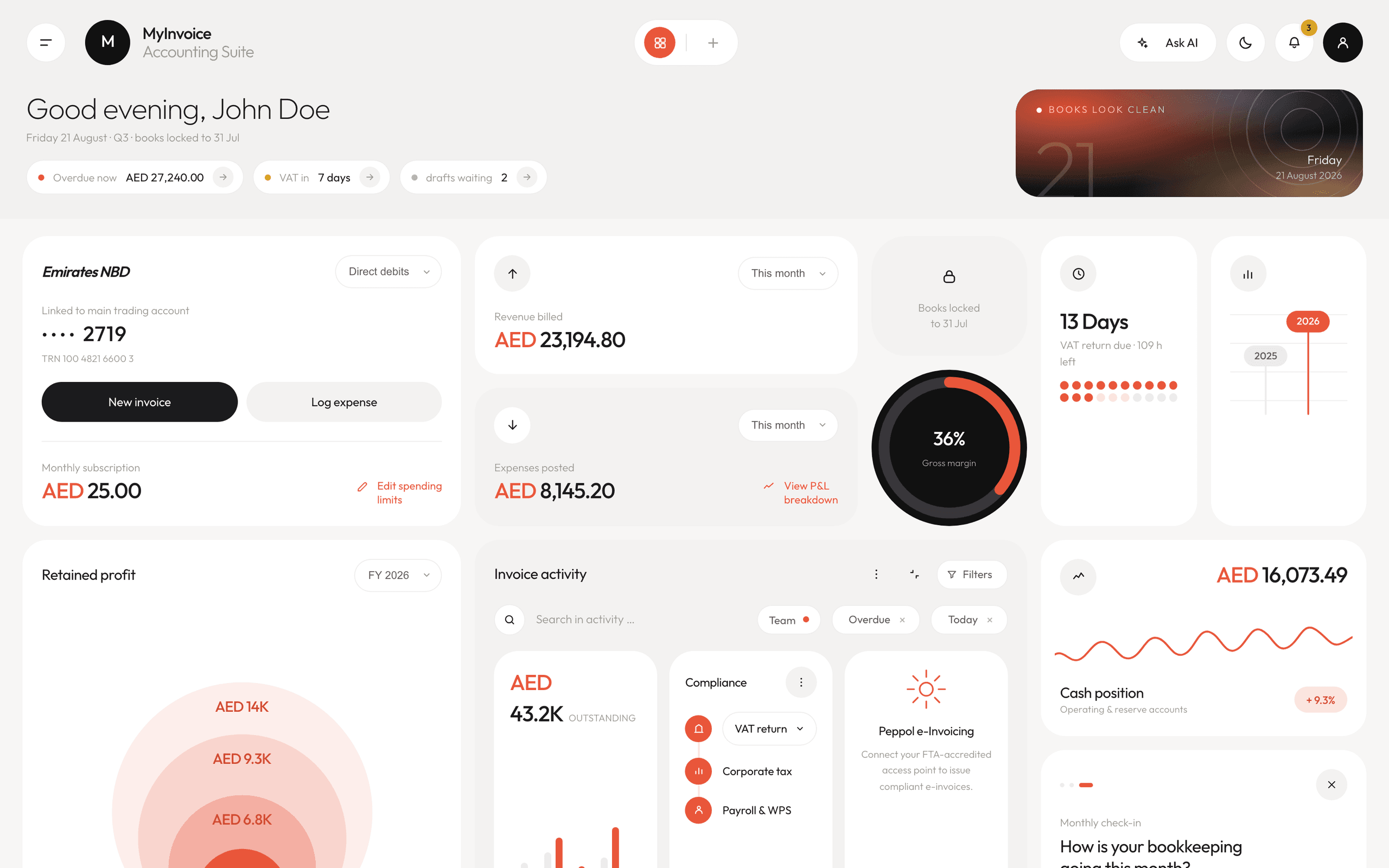
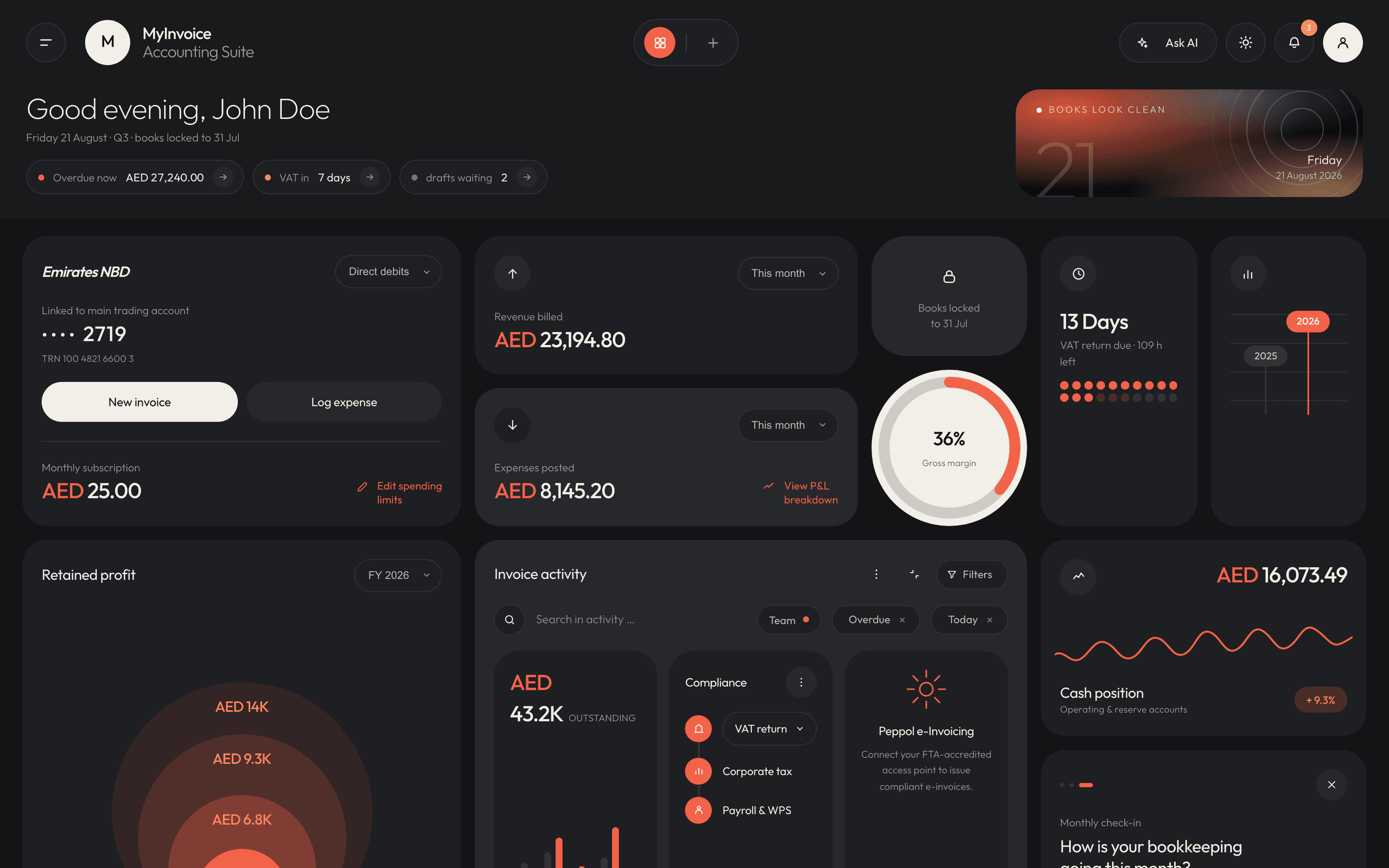
    Revenue billed, expenses posted, gross margin, retained profit, cash across operating and reserve accounts, and the days left on the VAT clock — read off the same transactions the ledger holds.

    • Aged receivables and payables, cash flow and profit analysis, exportable to PDF and Excel.

    • Multi-currency invoicing with daily rate sync and AED-base reporting.

    • A VAT countdown that knows your quarter and the state of your books.

The surface

One system, end to end.

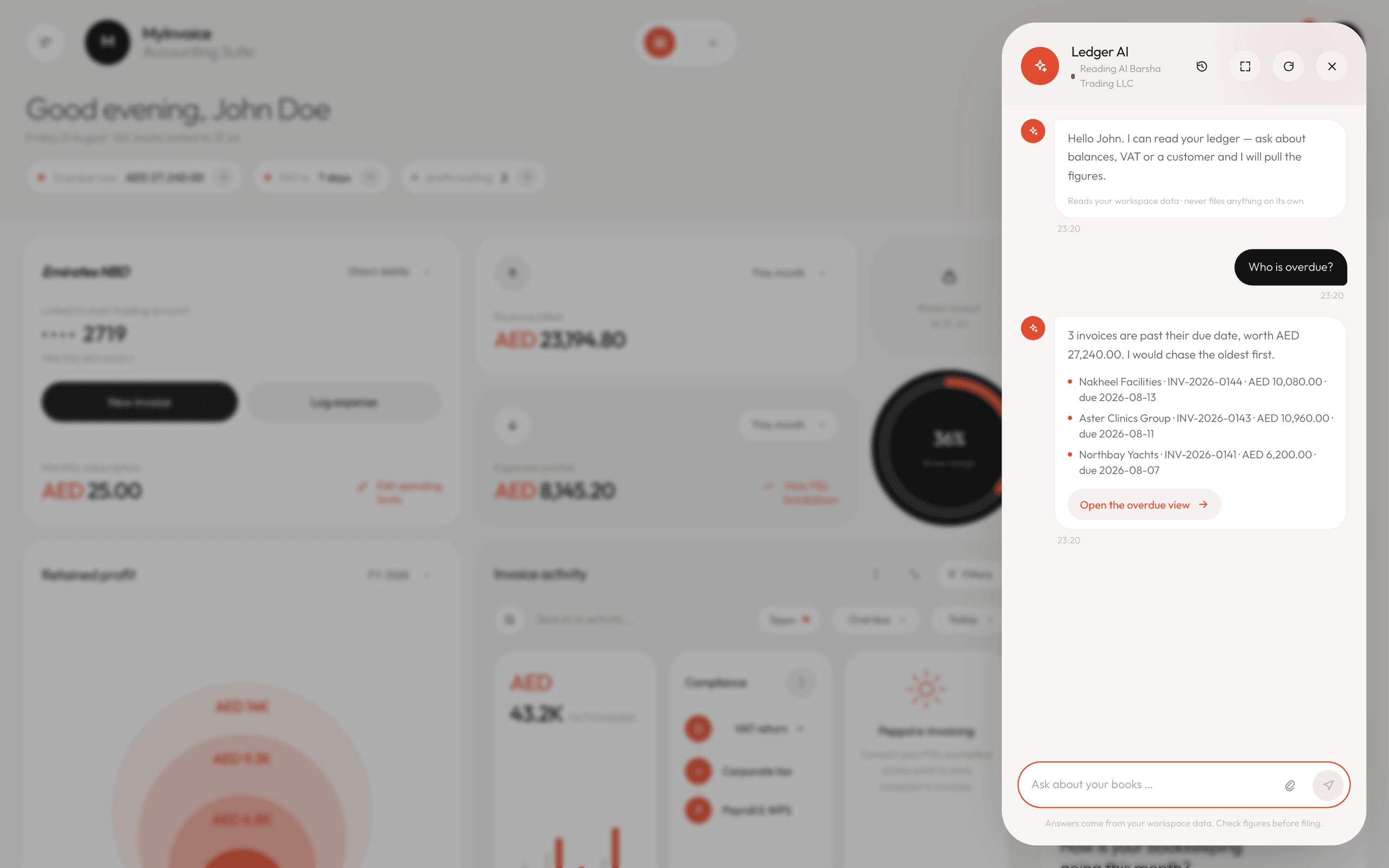
Documents, tax, the ledger, inventory, payments and reporting — the same records under all of them, in English and Arabic.

Start where you are

Issue one compliant invoice. Then look at the ledger.

Fourteen days of every feature, no card, and nothing to migrate before you can see whether it works the way you do.

English & Arabic · AED and multi-currency · UAE-built for FTA rules